
Deep-tech startups face a unique challenge when it comes to investor pitch decks: translating highly technical, often abstract innovations into a clear, compelling narrative that investors can quickly grasp. Founders are experts in the precise engineering and deep science of their advanced technology, but can struggle when the conversation shifts to conveying market potential and commercial relevance.
Selling your story without overwhelming the audience with buzzy jargon, dense data or wordy slides is a fine needle to thread. Too often, poorly designed decks either bury critical business insights under technical complexity or present an overly simplified message that fails to capture the depth of your innovation. Investors leave the conversation uncertain about your brand’s value and growth potential.
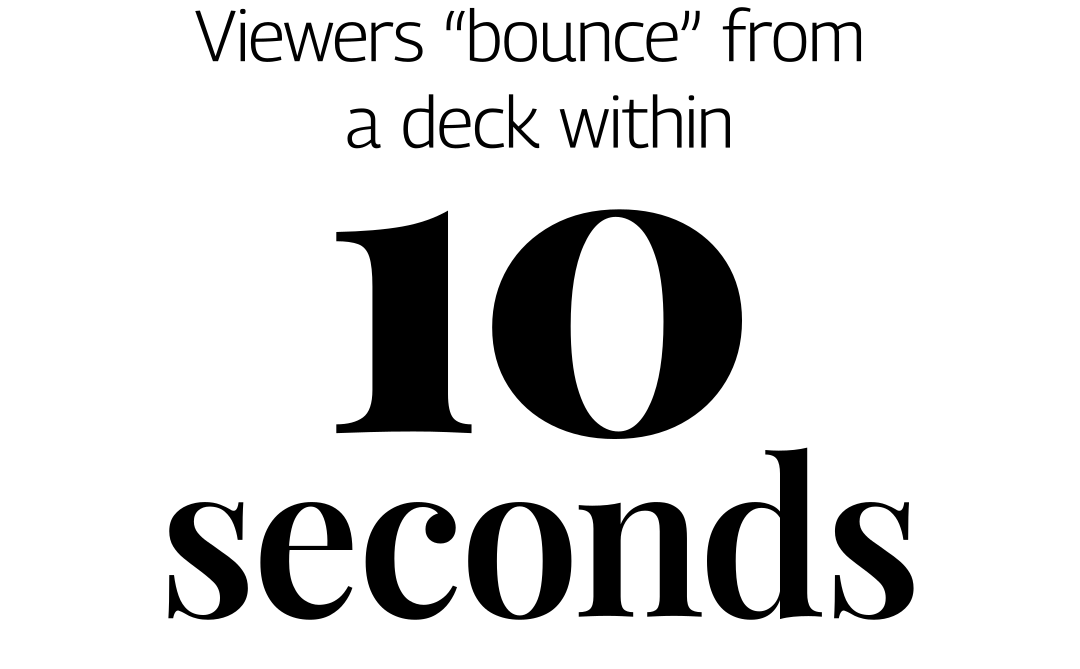
Ninety-five percent of pitch deck presentations fail to win funding. Across all types of presentation decks, viewers who “bounce” or tune out do so within 10 seconds. Most investors decide whether or not to fund within the first three slides (before you even get to the good stuff). Capturing and keeping investor attention is the first and most critical job of any pitch deck.
Most investors decide whether or not to fund within the first three slides (before you even get to the good stuff).
ROI, PDQ
While all marketing outreach touchpoints can deliver ROI in their own way (some more measurable than others), no piece of brand collateral approaches the power of the pitch deck to turn a marketing investment into operating capital.
Successful pitch decks weave together narrative strategy, industry expertise and data-driven visual design to craft a conversation that is both technology-rich and investor-friendly. When each slide communicates a single, compelling message, you build trust and credibility, and investors quickly understand your market potential — critical factors for deep-tech startups seeking early-stage funding.
To visualize is to realize
Wary of vaporware and highly sensitive to hyperbole, investors need to believe in the substance behind the sales pitch. When you visualize your tech with clarity and credibility, you’re not just making it look good, you’re transforming complex engineering into a story investors can grasp fast, easing their cognitive load and sharpening the strength of your commercial case.
A well-designed, thoughtfully branded and ruthlessly edited pitch deck makes your product look more real to investors. Data visualization, tech explainers, product renderings and animations all paint a picture that can be worth a thousand words — and millions of dollars.
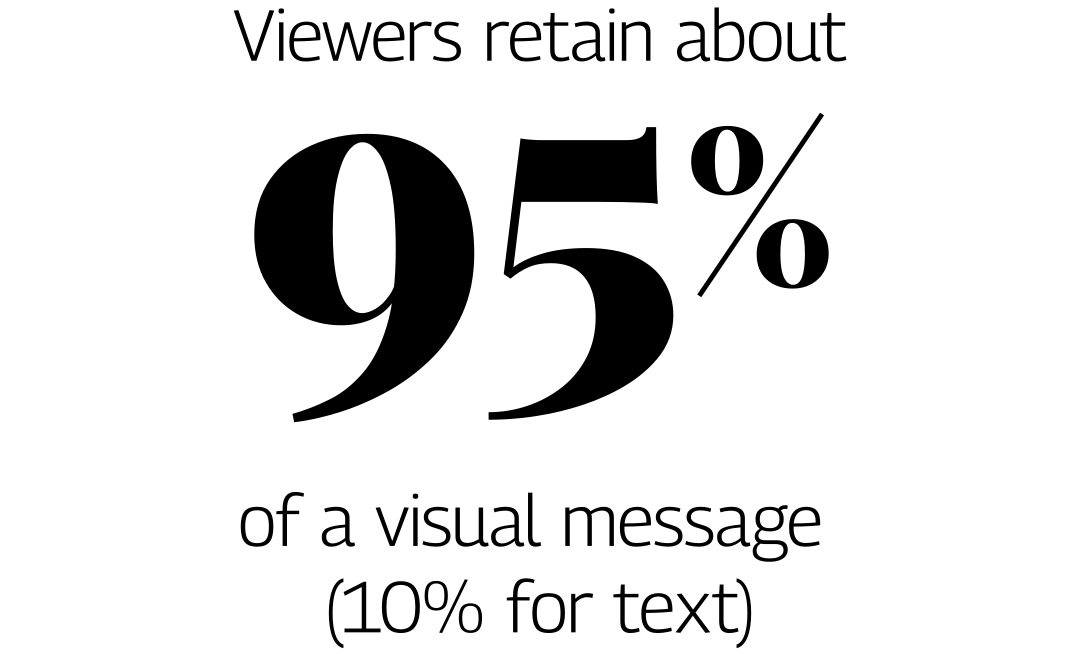
Visual patterns for winning deep-tech investor decks
Startups that earned funding did so with pitch decks that had higher design scores on average. Successful presentations all have these key elements in common:
- One core idea per slide (single visual focus)
Keep each slide to one message supported by one visual (chart, diagram, photo or icon). It speeds comprehension during rapid deck skims.
- Strong, simple cover and TL;DR slide
Lead with a one-line value prop and a one-page summary (problem → solution → traction → ask). Investors get oriented instantly, and the story lands faster. Funded decks show this pattern consistently.
- Ugly Excel charts are out, smart data visualizations are in
Use clear bar/line charts or small multiples and annotate the takeaway on the chart (e.g., “50% reduction in cycle time”). Annotated visuals reduce cognitive load and increase retention.
- Tech / process diagrams vs. dense text
Replace paragraphs about how your tech works with a custom, simplified, on-brand process diagram. The best cleantech and hard-tech decks do this.
- Branded visual language (colors, typography, iconography)
Decks that look cohesive signal operational maturity: Funded decks scored substantially better on design quality. Investing in design pays off.
- Slide count: 10–15, max
Keep the deck compact and easy to navigate. Investors actually read short, scannable decks.
- Use great headshots with one-line credibility badges
Skip the resume-style text blocks and pair each team member’s photo with concise creds (e.g., company, PhD, serial founder), paired with a hotlink to their LinkedIn profile (yes, founders need to be on LinkedIn). This quick visual shorthand helps investors remember who’s behind the tech. (Optimized LinkedIn profiles are a must.)
- White space is your friend
Let slides breathe. Proper use of white space can increase comprehension by up to 20%, making charts, diagrams and text easier to digest
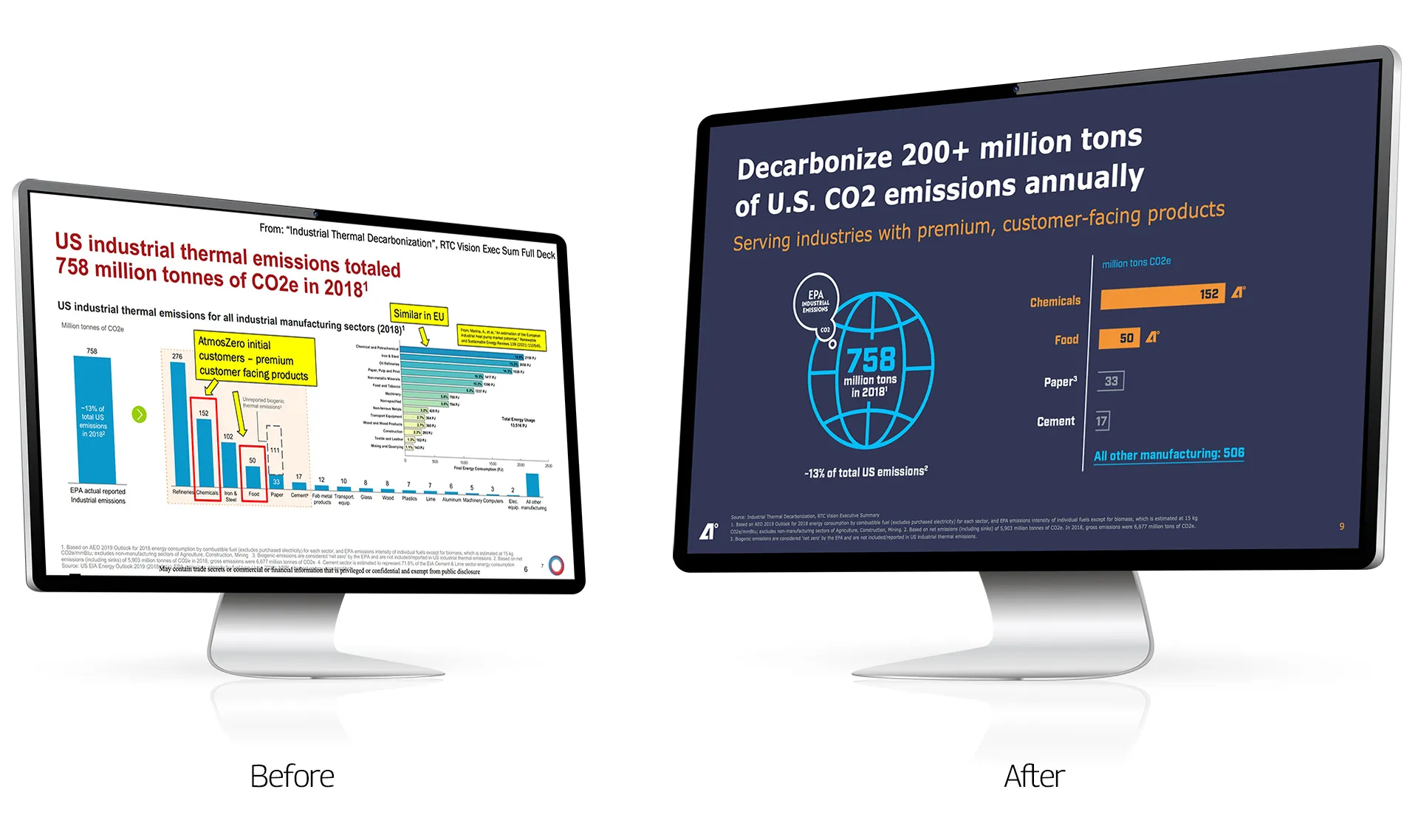
A well-designed, thoughtfully branded and ruthlessly edited pitch deck makes your product look more real to investors — that’s the magic trick.
The investment that keeps on giving
Well-designed pitch decks don’t just improve your chances in the next funding round, they lay the foundation for a repeatable, scalable brand system. Clear, visually compelling slides create reusable assets — one-page summaries, demo visuals and investor-ready libraries — that grow with your business and make every future round more efficient and persuasive.
Treating your pitch deck not as a presentation but as a thoughtfully crafted narrative can be the difference between a polite pass and a funded term sheet.
{{OrangeQuote | ABOUT DAWN PUTNEY | Dawn is Toolbox’s President and Lead Strategist, helping entrepreneurs and technology companies translate cutting-edge tech into powerful, customer-focused marketing strategies. Dedicated to building a future where women can more easily climb to the top of the business ladder, Dawn knows the future looks brighter and kinder when built by women. Dawn served as a founding board member of She's In Power and is a Women in 3D Printing booster. }}
{{OrangeQuote | ABOUT TOOLBOX CREATIVE | Toolbox Creative is a B2B Brand Engineering firm helping cool people in Additive Manufacturing, CleanTech and Emerging Technologies change the world. We distill complex technologies into powerful identity systems, websites and marketing tactics that create lasting impact and build brand love.}}

The Declaration of Regeneration
This is our internal word of the year. We’re giving you a peek inside our process, showing you how we think and giving you tips and tricks to bring regenerative design thinking into your marketing work.